
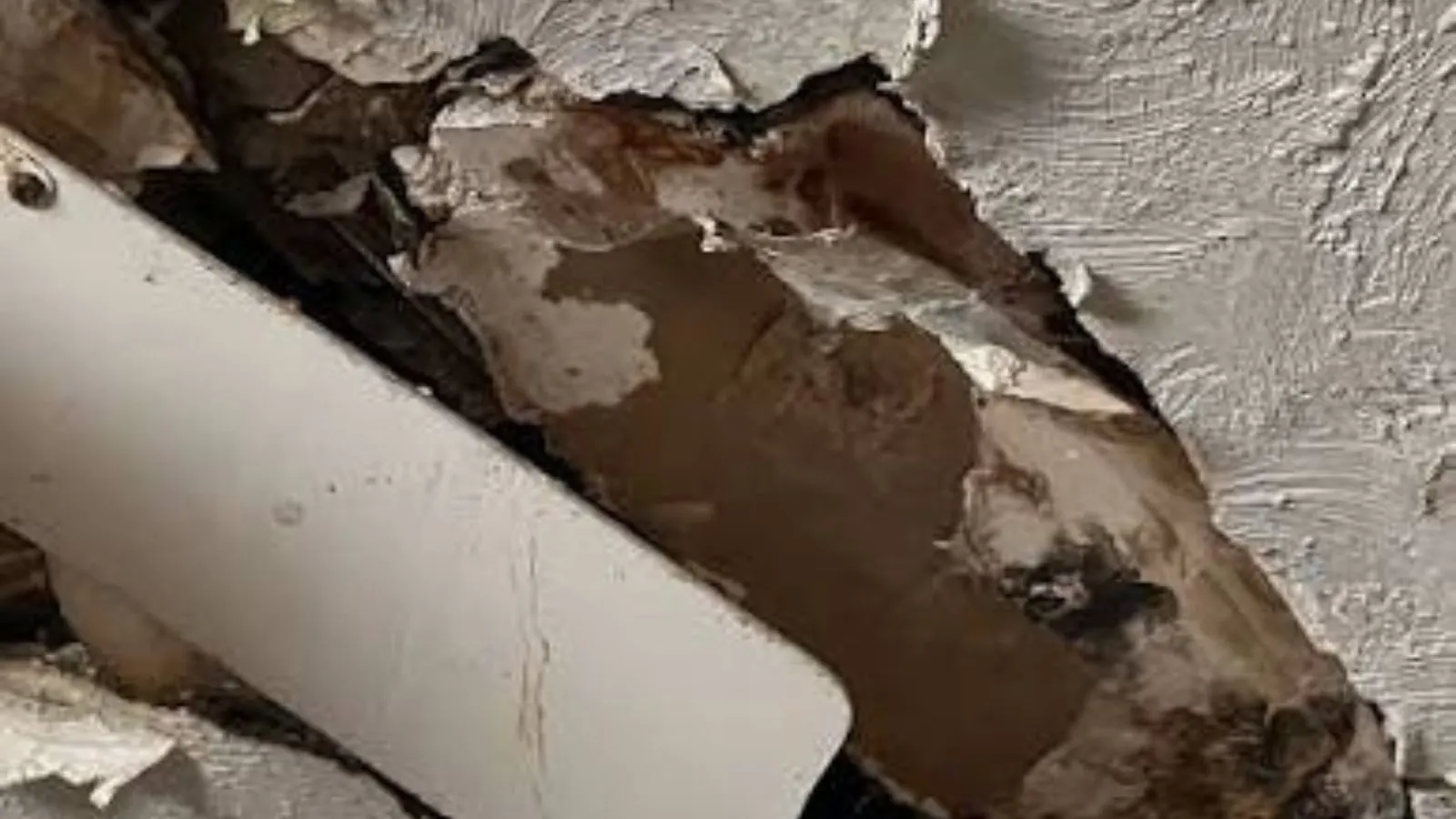
Why a wall that looks fine can still be wet
Drywall acts like a wick. Water that touches the bottom of a wall climbs the paper and gypsum, often several inches above the line you can see. Behind it, insulation and framing may be holding even more.
So the visible stain is only the start. A moisture meter, not the eye, decides how far the wet area goes and whether the board can dry in place or has to be cut out.
What you see and what it means for the wall
| What you see | What it usually means | What happens next |
|---|---|---|
| Paint bubbling or peeling | Moisture is behind the paint and the paper face | Readings show how far the damp area runs |
| Soft, crumbling or sagging board | Gypsum has lost its strength | The board is cut out and removed |
| Brown stain with a clean edge | Water has dried and left residue | Readings check whether the area is truly dry |
| Baseboard pulling away or swelling | Water reached the wall base and trim | Trim is removed so the base of the wall can be read and dried |
One reading is never enough, so we check low, middle and high on the wall.
First-hour safety steps for wet walls
Wet walls can hide electrical lines and water that is still moving. Start here.
Do these in order
- Stop the source. Shut the fixture valve or the main shutoff. A plumber or roofer fixes the leak itself.
- Treat outlets as unsafe. Do not touch switches or receptacles on a wet wall. Turn off the circuit only if the panel is dry and you can reach it safely.
- Keep the ceiling in mind. A heavy, sagging ceiling below a wet wall can fall, so stay out of that room.
- Do not poke or paint. Painting over a wet wall traps the moisture, and punching holes without a plan can spread it.
- Photograph first. Take pictures of the stain, the source and the damaged area for your claim.
- Call the 24/7 line. Phone (385) 988-9410 and tell us how high the stain runs.
Older finishes need care
If your home is older, ask about testing textured or plaster finishes before sanding or cutting. Disturbing some older materials can release dust that needs special handling.
What Payson's building age means for walls
Census data from 2019 to 2023 shows about 36 percent of Payson homes were built before 1980, and about 10 percent in 1939 or earlier. Older homes may hold plaster and lath, thicker framing or older insulation, so we confirm what is behind the wall before choosing how to dry it.
NOAA 1991 to 2020 normals from the nearby Spanish Fork and Santaquin stations show winter snowfall of about 55 to 66 inches a year. Those are neighbor stations, not Payson readings, but snow melt and roof leaks are plausible sources of wall moisture. Whether a repair needs a permit depends on the work, and Payson's Building Division can answer that.
Source type: U.S. Census Bureau American Community Survey, NOAA NCEI climate normals and Payson City Development ServicesHow wet walls are dried or opened
The method depends on the readings, the water source and the wall construction.
Moisture readings
Meters and a thermal camera map the wet area, and a reading from a dry wall in your house sets the target.
Ports and cavity drying
Small holes let warm, dry air move through the cavity behind the board. This can save drywall that is only damp and still sound.
Cutting above the wet line
When board is soft or too wet to save, it is cut out higher than the wet line, so the edge lands on dry material. Wet insulation is removed with it.
Air movers and dehumidifiers
Equipment dries the exposed framing and the room. Structural drying and dehumidification explains the daily monitoring.
Wall stained or soft?
Call (385) 988-9410 and we will tell you what to check first.
Plaster, lath and older walls
Plaster and lath hold water differently than modern board. They can dry slowly and crack as they do, and removing them is dusty work.
In older homes we also ask whether textured ceilings or wall finishes have been tested, before they are sanded or scraped. If a finish is unknown, testing comes first and the plan adjusts to the result. We follow the published ANSI/IICRC S500 reference for water damage restoration.
Rebuild support, and where the finishing happens
After walls are dry, new board, insulation and trim are installed, then taped, textured and painted. We describe that work and help coordinate it, but the finishing details live on the water damage repair page.
The key point here is order. Walls should not be closed until readings show the framing is dry. That keeps a one-time leak from becoming a second job.
Do it yourself or call
Cutting out a small patch of soft board from a clean-water drip is a reasonable do-it-yourself job if the cavity can dry afterward. Use a fan and keep the wall open.
If wet board runs a full wall, if insulation is soaked or if the cause is unclear, call (385) 988-9410. The answer depends on readings inside the wall, which are hard to get without tools.
What affects the cost of wet drywall work
Scope and price are explained before work starts. These factors drive it.
- Height and length of the wet area
- Whether board can dry in place or must be removed
- Wet insulation or framing behind the board
- Older plaster or textured finishes that need extra steps
- Days of drying and equipment needed
Coverage depends on the cause. Sudden pipe leaks are handled differently from slow seepage, and flood is usually separate. Photograph the damage, call your insurer early and keep records. We provide documentation but coverage is the insurer's decision.
Wet drywall questions
Call (385) 988-9410, the 24/7 line. Tell us how high the stain runs and where the water came from, and we will explain the next step.
Sometimes. If the board is firm and the water was clean, ports and airflow may dry it. Soft or crumbling board is removed.
Above the highest wet reading, so the new edge sits on dry board. That is often higher than the visible stain.
Soaked insulation holds water against the framing and is usually removed. It can be replaced after the cavity is dry.
Not until readings show the wall is dry. Paint over a damp wall bubbles and hides a problem.
Wall drying around Payson
We work from 39 N Professional Way in Payson and also serve Spanish Fork and Salem.
Walls in Santaquin and Springville get the same approach. Call (385) 988-9410 and describe the stain.
Unsure whether to cut it out?
Call (385) 988-9410 and we will explain how readings decide.