
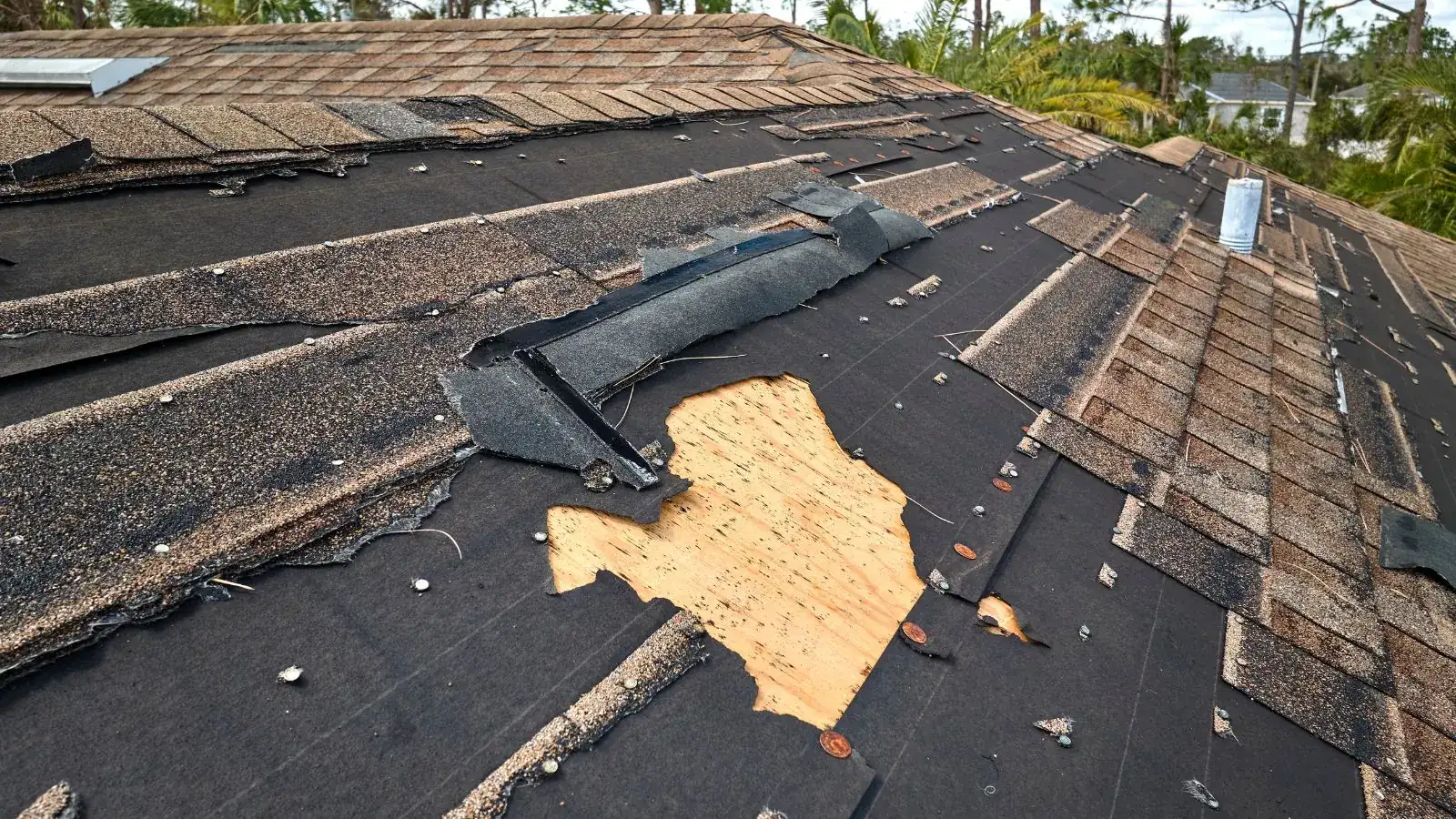
How storms get water inside
Storm water damage starts outside and ends in your living space. Hail or wind can lift shingles and open the roof, heavy rain can overrun gutters and downspouts, and fast snowmelt can saturate soil until it pushes into window wells and the basement. The water that comes in is rarely clean, because it has crossed roofs, yards and gutters first.
Treat storm water as a category 2 problem at the least, meaning it may carry contaminants. That affects what can be dried in place and what has to come out. Our job starts once the water is inside, while a roofer handles the opening above.
What storms leave behind and what it means
| What you see | What it often means | What happens next |
|---|---|---|
| Stains spreading on a ceiling after rain | The roof or flashing let water in | We dry the ceiling and attic area. A roofer repairs the roof |
| Water pooled along basement walls | Window wells or soil saturation after heavy rain or melt | We extract and dry, and check carpet and drywall for wicking |
| Gutters overflowing at the wall | Clogged gutters or downspouts sent water behind siding | Wall and floor moisture is mapped before drying |
| Wet insulation in the attic | Wind or hail opened a gap | Wet insulation is removed and framing is dried |
Roof work and tarping belong to a roofer, and we coordinate drying around that schedule.
First-hour safety steps after a storm
Storm damage often comes with weather that is still active. Put safety ahead of salvage.
Do these in order
- Avoid downed lines. Stay far from any fallen power line, and call 911 or the utility. Never assume a line is dead.
- Watch the electrical panel. If water is near outlets, fixtures or the panel, keep out and have an electrician check it. Switch off power only if you can do so dry.
- Stay off the roof. Wet shingles and wind make roof work dangerous. Call a roofer to tarp or repair the opening.
- Contain what you can. Place buckets under drips, move furniture and lift small items off wet floors.
- Keep clear of the water itself. Storm water can carry dirt and debris. Wear boots and gloves if you must enter, and keep children and pets out.
- Photograph and call. Take photos of the roof if visible from the ground, the ceilings and floors, then call us.
Do not wait for the rain to stop
If water is actively entering and the panel is dry and safe, call us now. Extraction can begin while a roofer arranges the roof.
Melt, rain and what the numbers say
Payson City's 2023 flood-preparation letter reported snowpack at the Payson Canyon SNOTEL site at 253 percent of normal in April 2023, with high water generally peaking from mid-May to mid-June. The letter said crews cleaned the Dry Creek Channel, Peteetneet Creek and debris basins, and that sandbags were offered.
NOAA's 1991 to 2020 normals at nearby stations, not Payson itself, show about 20.2 inches of precipitation and 66 inches of snowfall a year at Spanish Fork Power House, and about 18.4 inches and 55 inches at Santaquin Chlorinator. That is a lot of snow to melt each spring.
Source type: Payson City 2023 flood-preparation letter with NRCS SNOTEL data, and NOAA NCEI climate normalsWhat we do inside once the weather lets us
Storm water follows gravity, so we start at the lowest wet point and work outward.
Extraction
Extraction units, submersible pumps and wet vacs remove standing water from floors, carpet and basement rooms.
Moisture mapping
Moisture meters and a thermal camera find wet ceilings, wall cavities and insulation that are not visible.
Controlled removal
Soaked insulation, pad and damaged board are cut out. Because storm water may be contaminated, cleaned surfaces get an antimicrobial treatment.
Drying equipment
Air movers and dehumidifiers run until readings match dry reference points. See flood damage restoration for larger events.
Storm water inside?
Call (385) 988-9410 and tell us where it is coming in.
Which trade fixes what
We are not roofers, so we do not tarp, patch or replace roofing. Call a roofer for hail or wind openings, and a gutter or drainage contractor for clogged downspouts and grading. If the issue began at the roof, our roof leak water damage page explains the inside work.
Our process follows ANSI/IICRC S500 as a published reference. We explain scope and price before work starts, and we keep records so your insurer sees what was done.
What affects the cost of storm water cleanup
Scope and price are explained before work starts. These points shape the job.
- How much water entered and how many rooms are wet
- Whether the water came through the roof or from the ground
- How much insulation, ceiling and flooring must be removed
- Whether contamination calls for added cleaning steps
- How many days drying equipment must run
Insurance depends on how the water arrived. Wind-driven rain through a storm-opened roof is often handled under a homeowner policy, while rising water or groundwater is usually a flood claim. Flood insurance typically takes 30 days from purchase to start, so buying after a storm is too late. Document the damage, call your insurer, and we provide notes and readings. We cannot promise coverage.
Preparing for the next storm
Clean gutters in fall, extend downspouts away from the foundation and clear window wells before spring melt. Inspect the roof after hail or heavy wind.
Keep photographs of your home in good condition, since before-and-after images help a claim. We also serve Salem homes dealing with the same weather.
Storm water questions
Yes. Call (385) 988-9410 at any hour. Tell us where water is entering and whether the electrical panel is dry.
No. A roofer tarps and repairs roofing. We dry the interior and can coordinate timing with them.
Treat it with caution. It may carry dirt and contaminants, so wear boots and gloves and keep children and pets out.
It depends on the cause and your policy. Roof openings and rising water are often treated differently. Ask your insurer before assuming.
Usually not in time. Flood insurance generally takes 30 days to become active, so ask about it well before spring.
Storm cleanup near Payson
We work from 39 N Professional Way in Payson, UT, and our 24/7 line is (385) 988-9410. Storm damage varies by roof, yard and foundation, so we look before planning.
We also serve Spanish Fork and Springville, along with Santaquin and Salem.
Start drying after the storm
Our crew answers (385) 988-9410 day and night.